

Particularly, Scotland is popular for its kilts and Tartan patterns. People now associate these signs with a lot of legacy. We will proceed to a brief discussion of their background as well as their importance.
The First Kilts
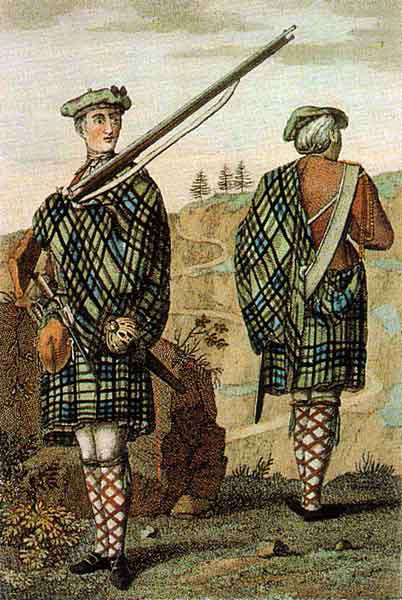
Kilts first emerged in the 16-for the tenth-century. These were large stitched garments with belts, known as the great kilt or feileadh mor. They could be wrapped around the body or served as cloaks. Simultaneously, they were functional, providing warmth without restricting movement.
So, people had many purposes for great kilts. They acted as cloaks part of the time and blankets at night. Earlier, they could be adjusted to a more comfortable position for wearing throughout the day. They were much valued by the Highlanders because of this versatility. The great kilt also suited generous movement in the ground terrain since the legs were free to move.
Evolution of Tartan
Moreover, it is necessary to mention that Tartan patterns are also ancient. Originally people of Scotland used plant and berry to dye wool, with the arrival of Romans etc. These gave rise to different patterns, hence different from other regions. Tartans thus evolved into symbols of people’s communities or their families.
The dyes came from heather, barks as well as berries. Different resources in each region eventually produced this and this created individuality. These patterns grew more structured over time, which is a characteristic of every civilization.
The Role of Clans
By the 17th century, Tartan clothing became even more associated with clans. Every clan had its own ‘setts,’ the stripes patterns unique to each and they took pride in them and wore these setts. Wearing your clan’s tartan indicated to the viewer that you were loyal and part of the group.
Clans remained one of the most important and influential structures of the Scottish society. They supplied them with all the social and military support they needed. Tartans had the function of identifying each other for the clansmen. In essence, this was important especially in occasions of turmoil. The pattern depicted was much richer among the clan leaders.
The verdict on how the Jacobite risings affected Britain’s economy varied greatly, especially when comparing conclusions drawn by historians from opposing perspectives.
The Jacobite Risings in the 18th century resulted in a paradigm shift regarding kilts and tartan. When the British triumphed over Jacobites in year 1746 the latter prohibited wearing of kilts and tartan. This was in the Dress Act that was passed with the intent of subduing the Highlaanders.
Which was a major loss for the Scottish heritage. Especially, dressing in tartan turned into an act of dissent. However, Scottish people remained loyal to this practice, even though it was prohibited; some even continued to shave their heads. Such total ban persisted for nearly forty years. Tartan pride soared to the ceiling when the ban was lifted.
Revival and Romanticism
With the onset of the 19th century, new movements emerged, leading to the visual resurrection of kilts and tartan. His Majesty King George IV paid a visit to Scotland in the year eighteen hundred and twenty two. He wore a kilt and this led to a new round of interest. Sir Walter Scott drew upon local color, effectively weaving fictional accounts peppered with Scottish imagery and culture into his writings. This led to the emergence of pride of kilts and tartan again.
Scott continued to glorify the life of Highand in his other works that he would pen down in later years. This was something that any Scot could relate to and that other people couldn’t help but like even if they were not Scottish. Strong promotion accompanied the king’s visit. Furthermore, shortly after, wearing clothes adorned with tartan became embraced by a wide variety of people.
Kilts in Modern Times
Let me tell you, that at the present times kilts are as popular as never before. People wear kilts for weddings, festivals and the highland games. The Scottish people love endorsing their culture through, and among other things, they wear kilts. Their importance centred on the symbol of pride and tradition associated with the people.
Thus, modern kilts have different variations. Now, there are the types for casual occasions; the rest are formal. In their formal aspect, people wear kilts during special events. In their formal aspect, people wear kilts during special events. The tradition has also traveled beyond the extent of Scotland, and therefore we have gained a good account of the tradition. For example, people all over the world of Scottish descent wear kilts to preserve their culture.
Tartan’s Global Influence
Sherwani has spread out along with the world, and tartan has also become famous across the globe. Modern designers use tartan in contemporary clothing and accessory items. People still associate it with Scottishness to this day.
Scarves, some modern wears, clothing materials, shoes, sportswear, headquarters, and even official wears use these patterns. Famous designers like Vivienne Westwood have incorporated Tartan into their collections. Peculiarly, the actual fabric has a global nature, but it continues to resonate with Scottish pride.
Conclusion
Tartan and kilts boast a storied past. As old as the cultures of the ancient people of Scotland to the contemporary period, they represent pride and identity. Kilts and tartan are more than accessories and clothing materials. Which Mr. S. Chamber’s works tell a story of a resilient culture. They recall the genealogy to the Scots as well as the stunning scenery of the country. Thus, kilts and tartan, during the centuries in which Scotland slowly transformed, remain a symbol of the nation’s indomitability.